The line that started it
The joke
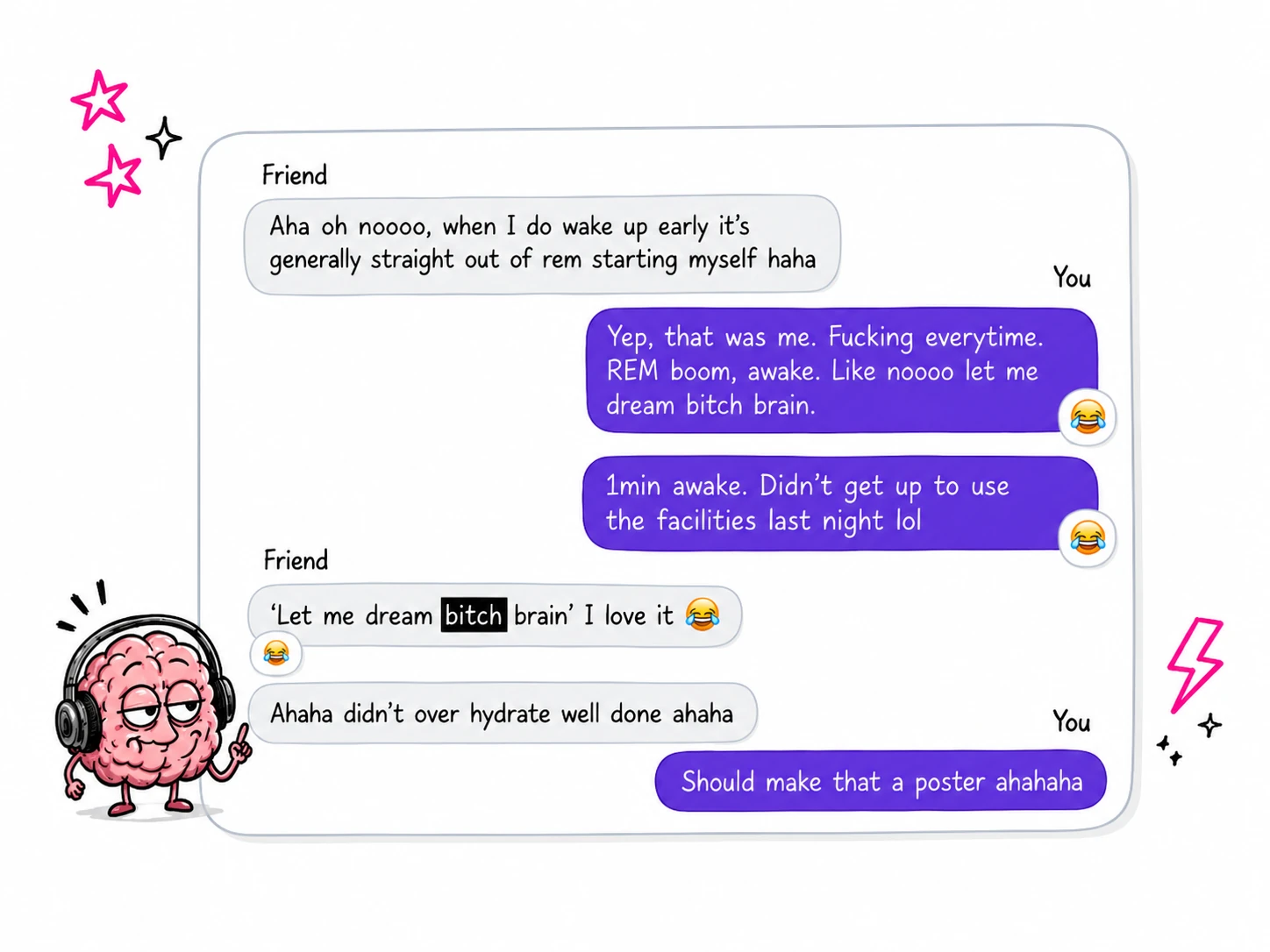
Two sleepy friends were laughing about the deeply unfair moment when a perfectly good dream gets cancelled and a brain decides it is time to be awake.
“Like noooo, let me dream, Bitch Brain.”
It was just a private joke. Then somebody said it should be a poster.
The joke gets louder
The poster laugh
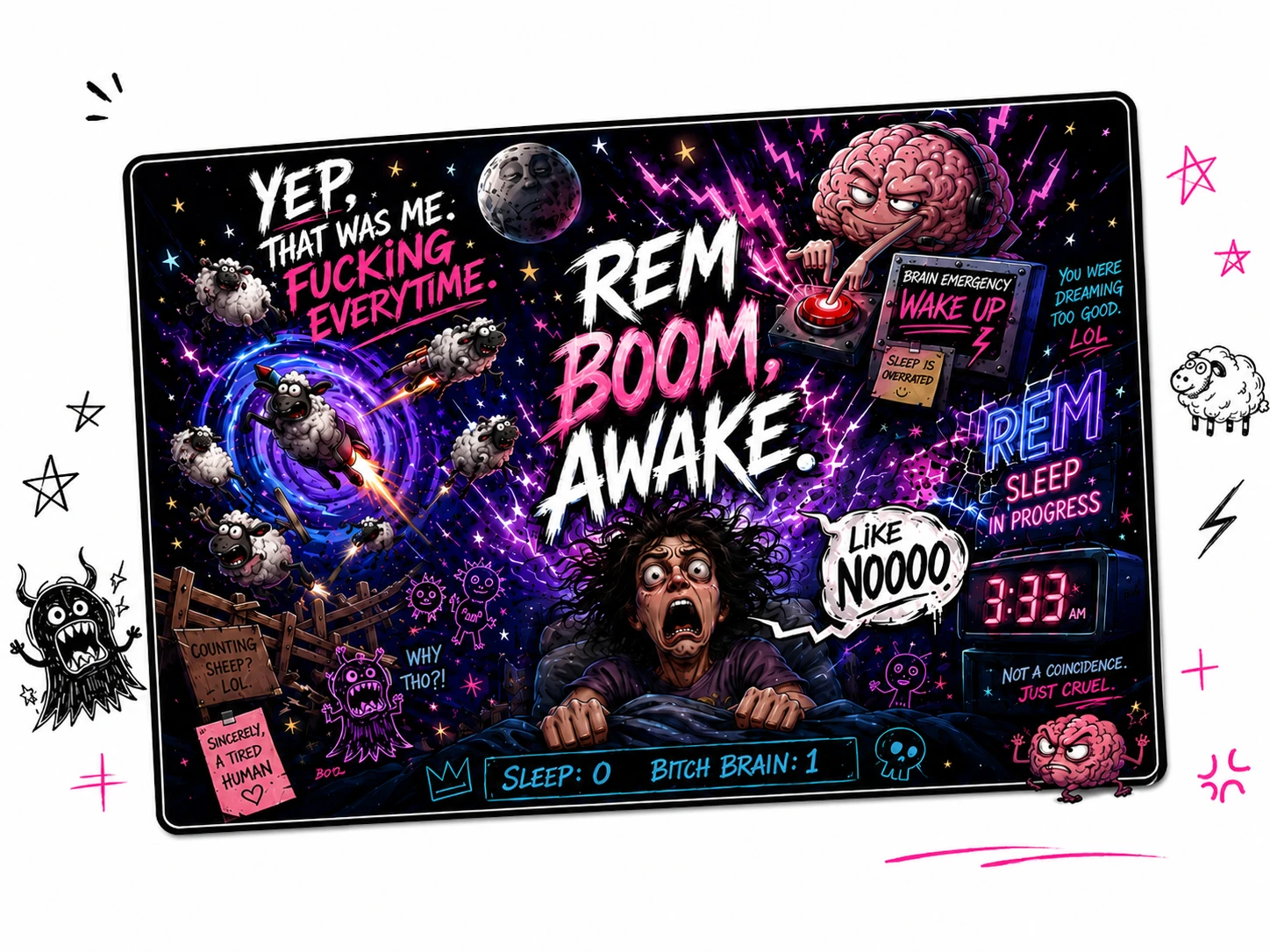
The throwaway line went into ChatGPT and came back as an absurd, overproduced sleep emergency: neon lightning, airborne sheep, a furious alarm clock and a smug pink brain pressing the button.
It was made for a laugh. The problem was that it felt like the beginning of something.
From screen to paper
The hand sketch
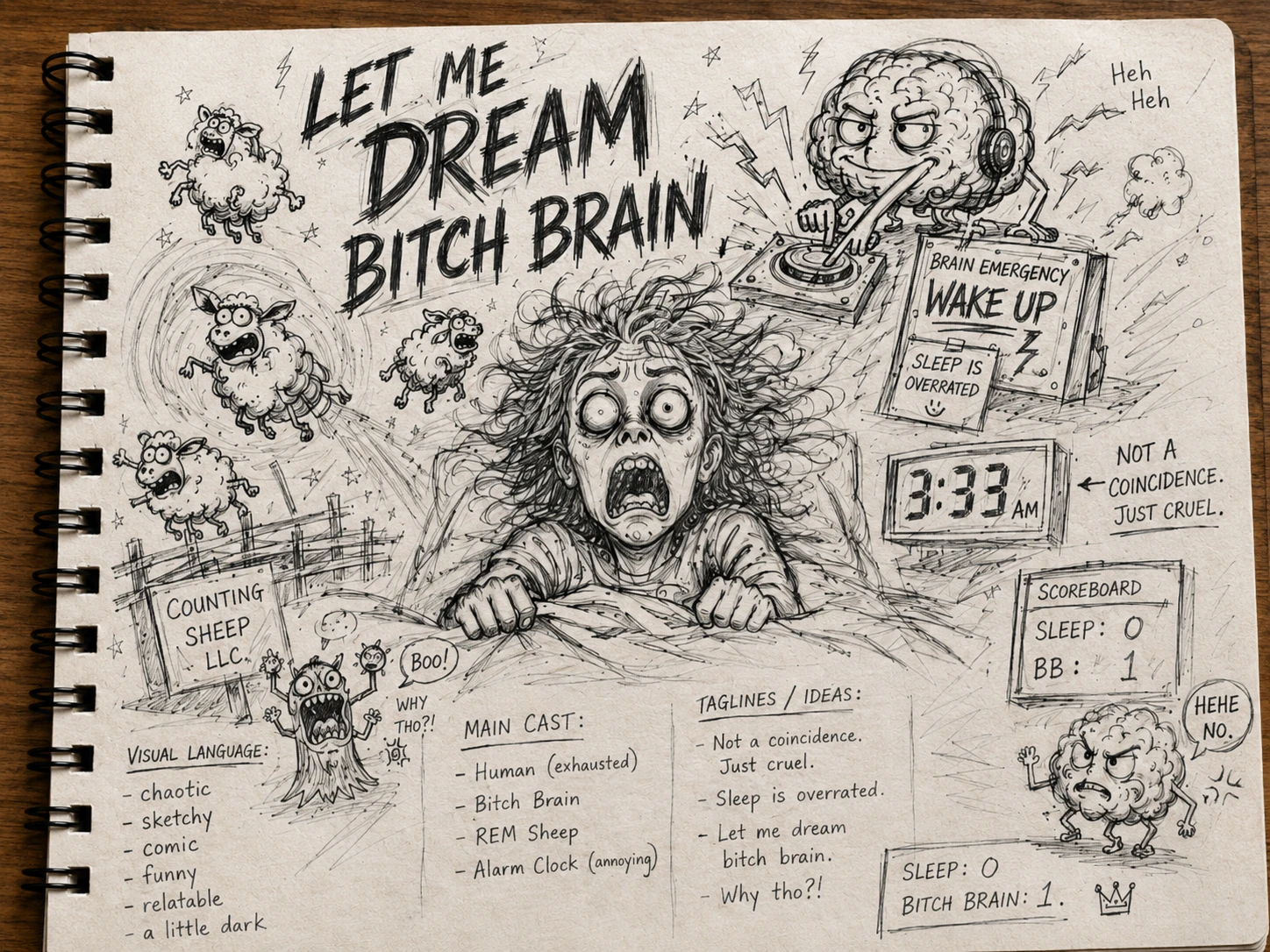
Then the generated chaos was redrawn by hand. Pencil lines replaced polish. Notes filled the margins. The joke began to develop characters, props, recurring gags and a visual language of its own.
The roughness mattered. This was the moment the poster stopped being an output and became source material.
The repeatable premise
The idea
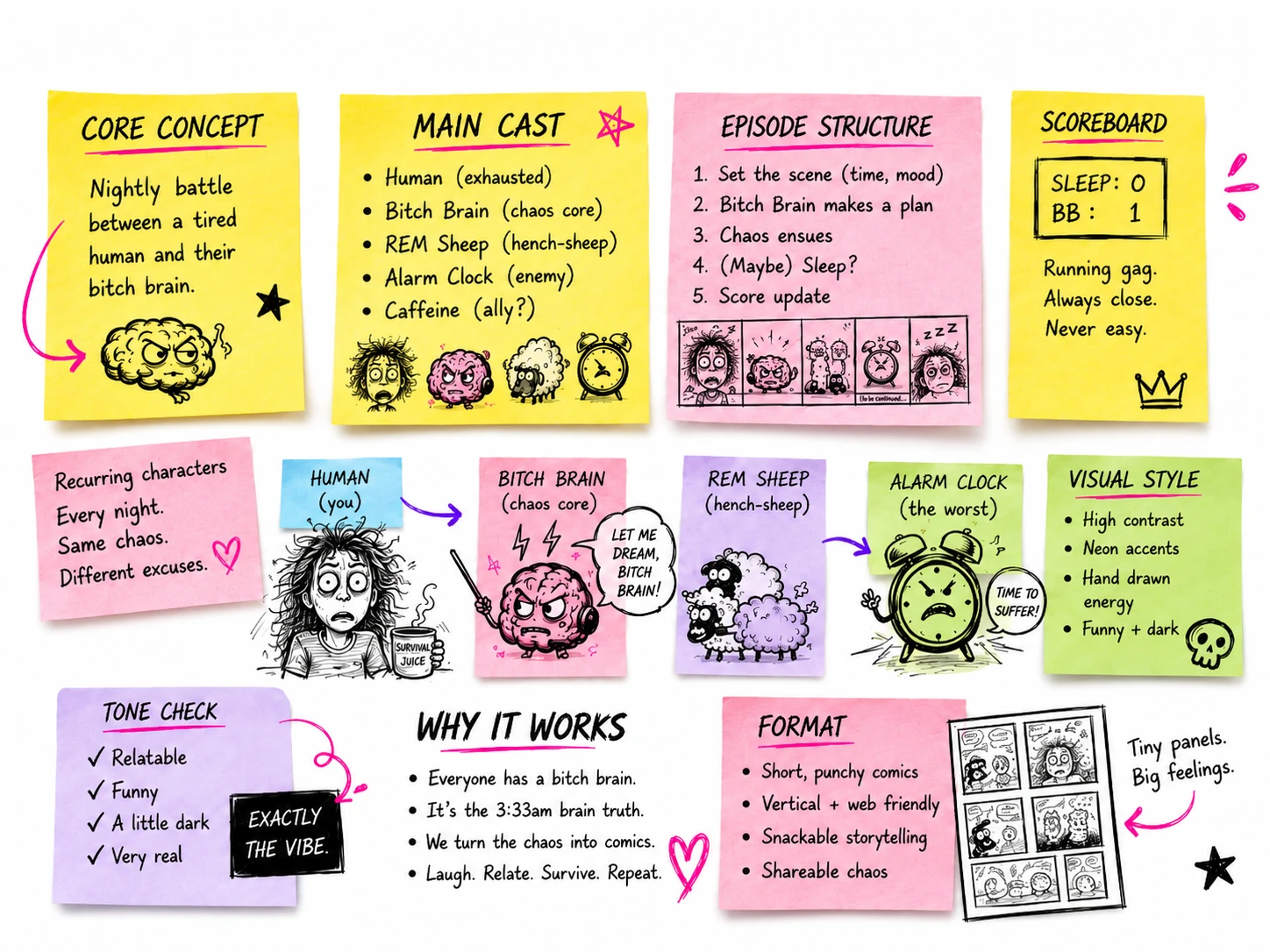
A simple comic engine emerged: something normal happens, Bitch Brain assumes the worst, and The Girl has to survive the internal emergency.
That gave the project a cast, a short comic format, a running scoreboard and a tone that could be funny, relatable and a little dark without becoming cruel.
- Recurring characters and familiar battles
- Short, punchy, web-friendly comics
- Human versus Bitch Brain, one point at a time
Notebook to internet
The deployment
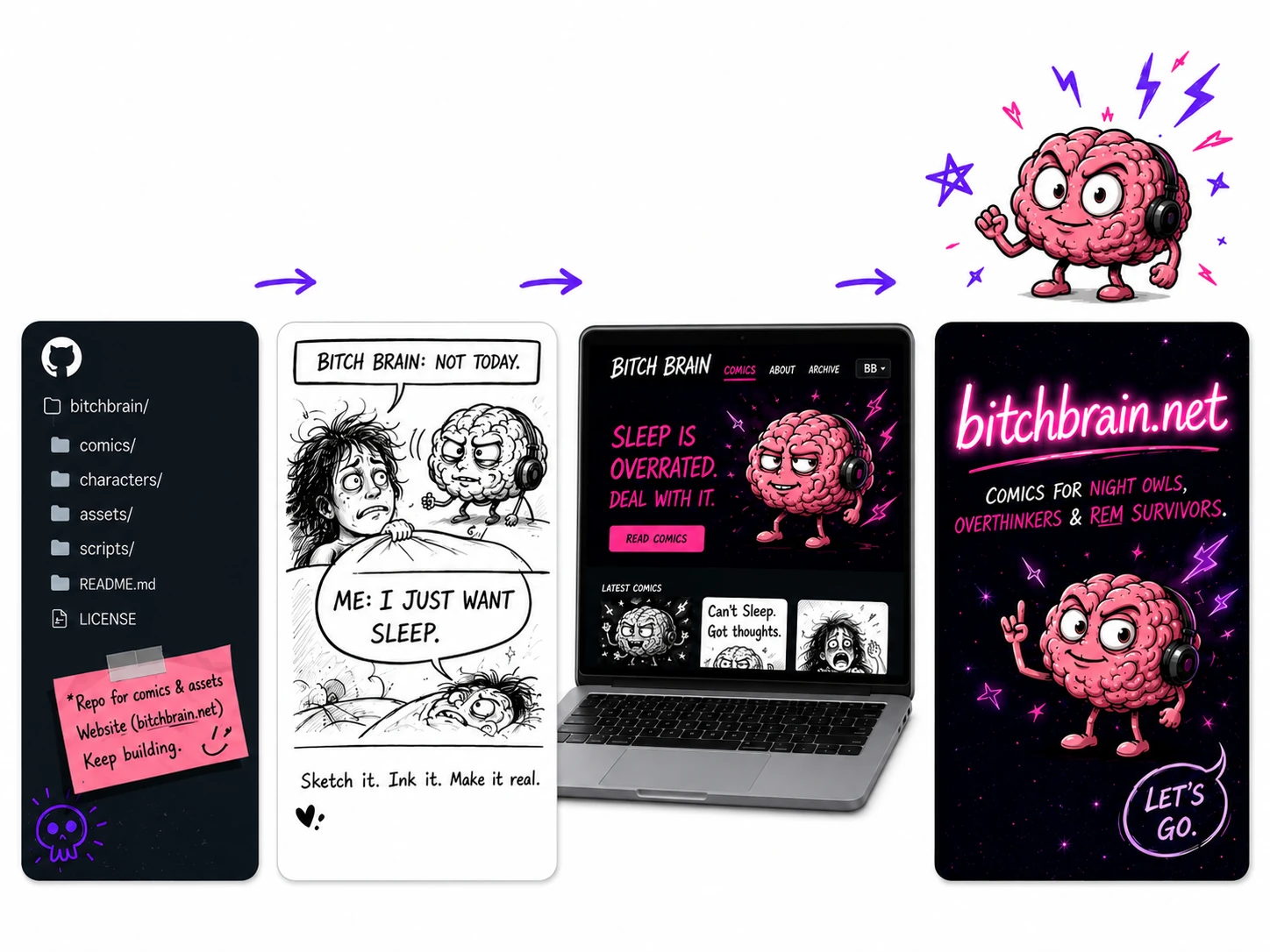
The idea got a repository, approved character assets, a comic pipeline and a home at bitchbrain.net. The first joke became the foundation for a series.
It was no longer just something two friends laughed about in a chat. It had been built, drawn, published and sent into the world.
Read comic #1